

The Singaporean gambling scene continues to thrive in 2026, and competition between the top Singapore online casinos has never been fiercer. But with so many sites excelling in 2026, finding the best online casino in Singapore has become pretty tricky.
To help you narrow down your options, this guide highlights the best casino sites Singapore has to offer. Our reviews cover each site’s welcome bonuses, games, and mobile compatibility, so you can make confident choices. We’re certain that our online casino Singapore list will lead you to your new favourite site.

Weekly Rescue Bonus Up To SGD 2800
Weekly Rescue Bonus Up To SGD 2800


Refer a Friend - Get Up to 1,000 SGD
Refer a Friend - Get Up to 1,000 SGD

588% up to SGD 2,588 +128 FS
588% up to SGD 2,588 +128 FS

150% up to $2,000 Welcome Bonus
150% up to $2,000 Welcome Bonus

Exclusive 150% Welcome Bonus + 50 Free Spins On Us!
Exclusive 150% Welcome Bonus + 50 Free Spins On Us!


100% Welcome Bonus Up To 160 SGD
100% Welcome Bonus Up To 160 SGD

100% up to 2250 SGD + 150 Free Spins
100% up to 2250 SGD + 150 Free Spins

300% Welcome Bonus up to SGD 1500
300% Welcome Bonus up to SGD 1500

Up to €350 Bonus + up to €55 Free Bet + 5% cashback
Up to €350 Bonus + up to €55 Free Bet + 5% cashback


600 SGD + 150 Free Spins
600 SGD + 150 Free Spins

138% Welcome Bonus
138% Welcome Bonus

SGD388 VIP switch to me Bonus
SGD388 VIP switch to me Bonus

Welcome Bonus 200% up to SGD 1,500 + 60 FS
Welcome Bonus 200% up to SGD 1,500 + 60 FS

With so many excellent Singaporeian casinos online this year, it helps to have a snapshot of the top sites. Below we’ve listed the top 10 online casino Singapore sites, each known for unique features, fast payouts, and strong player support.
| Casino | Key Features | Rating |
| BK8 Casino | Fast payouts with no KYC checks | 5 /5 |
| 12Play Casino | Local payment support and seasonal deals | 4.8 /5 |
| GemBet Casino | Thousands of vibrant slots with festive themes | 4.6 /5 |
| Bet Goat Casino | Light-speed crypto payments & no KYC | 4.4 /5 |
| Playdash Casino | Incredible slot selection & full sportsbook | 4.2 /5 |
Ready to dive deeper? Below are full reviews of the best online casino sites Singapore players can rely on in 2026. We’ve explored each platform’s strengths, bonuses, casino game variety, and user experience to help you find your perfect match.

BK8 is one of the most established casinos online in the Asian gambling market. It should be no surprise, then, that BK8 is our number one Singapore online casino. Active since the mid-2010s, this site combines a full sportsbook with a huge live casino library and plenty of online slots. In other words, it has everything you need on a single streamlined platform. Best of all, BK8 partners with leading providers such as Evolution Gaming, Red Tiger, and Pragmatic Play, ensuring high-quality games and plenty of variety for players, no matter their preferences.
The platform is fully optimised for desktop and mobile browsers, with apps also available for Android and iOS. Beyond traditional casino games, BK8 includes lottery, fishing games, and esports betting. Payments are highly localised, covering PayNow, bank transfers, credit cards, and crypto options.
The BK8 welcome bonus is a 100% matched deposit, worth a maximum of 800 SGD. After that, regular users can enjoy free spins, reload bonuses, and daily cashback. There’s also a VIP club, where members enjoy higher cashback percentages and priority withdrawals with higher limits. The site operates under a full Curaçao license. This high level of regulation makes BK8 possibly the safest Singapore casino online.
| Fact / Feature | Detail | Notes |
| Licence / Regulation | Curaçao eGaming | An offshore license that’s common in Asia |
| Game Library | 2,000+ titles | Slots, live casino games, and sports betting |
| Payments | PayNow, Bank, Cards, Crypto | Wide local support |
| Bonuses | 100% deposit match up to 800 SGD | Reloads & rebates |
| Withdrawal Limits | VIP-dependent | Fast local payouts |
Pros
Cons
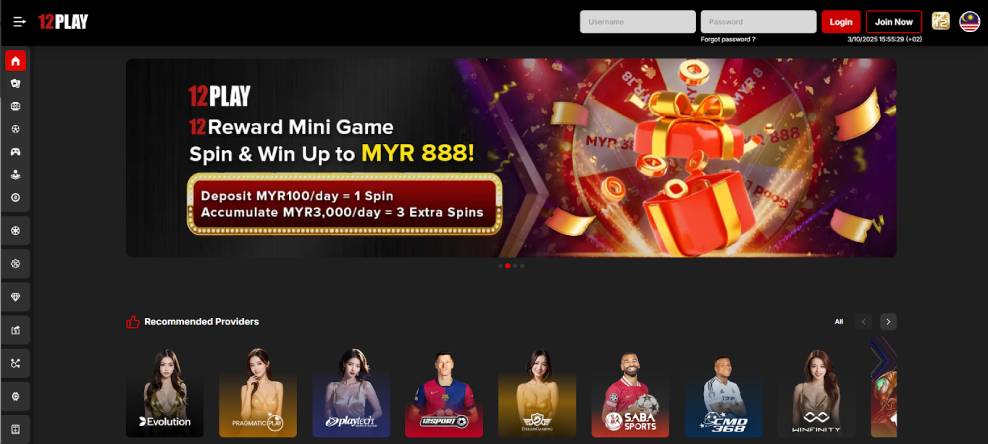
12Play has become a popular choice in Singapore thanks to its mobile-first design and wide selection of games. The platform covers slots, live dealer games, lottery, and sports betting, making it a complete hub for local players. Its focus on localised content and payment options helps it stand out in the regional market.
The 12Play interface is clean and highly user-friendly across devices. Everything runs smoothly with minimal loading times when switching between games. Payments are possible via a number of local options, including PayNow. Plus, for private players, crypto options are also supported. 12play’s partnered providers include elite studios like SA Gaming, Evolution, and Spadegaming. In other words, expect an excellent mix of international and regional casino gaming options.
As a welcome offer, 12Play users will receive a 100% first-deposit bonus, worth up to 500 SGD. Then, regulars can expect ongoing reload promotions, rebates, and a VIP system with enhanced cashback and priority customer service. Unfortunately, for non-VIP members, customer support is sometimes slower during peak hours. Like BK8, 12Play Casino operates under a Curaçao license, making it one of the safest casinos in Singapore.
| Fact / Feature | Detail | Notes |
| Licence / Regulation | Curaçao eGaming | Offshore framework |
| Game Library | 1,800+ titles | Slots, live games, lottery & sports betting |
| Payments | PayNow, Bank, Crypto | Local payment support |
| Bonuses | 100% up to SGD 500 | Reloads & rebates |
| Withdrawal Limits | Tier-based | Moderate to fast payouts |
Pros
Cons
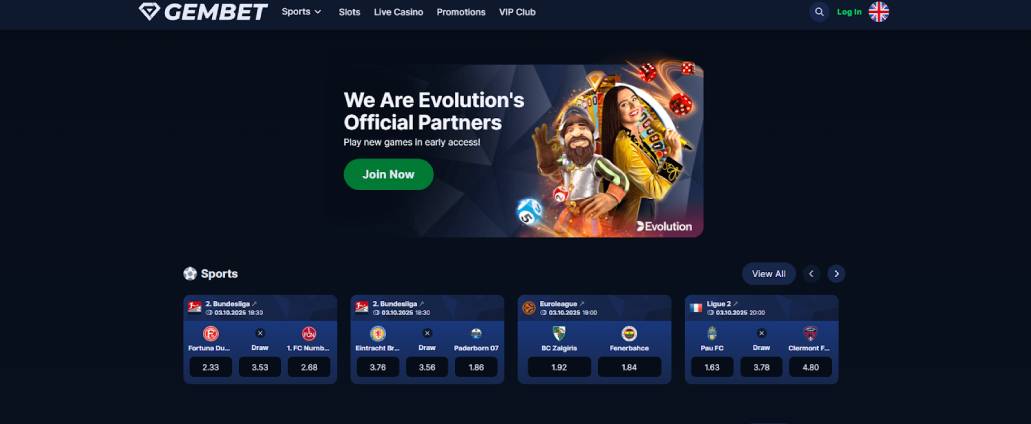
Gembet is one of the newer sites on the Singapore online casino scene. It’s perfect for players who value both simplicity and speed. The site specialises in online slots and fishing titles. That said, its selection of live casino games is also excellent. Admittedly, the Gembet game library is a little lighter than some competitors, but the quality of what’s on offer here makes that a non-issue, in our opinion at least.
Gembet emphasises reliability and fast withdrawals. Deposits and withdrawals are processed via PayNow and bank transfers, often within the same day. Promotions include a 100% welcome bonus, capped at 300 SGD. There’s also regular cashback and reload offers for loyal players. The overall setup of the site caters best to players who value speed, reliability, and a smooth experience from start to finish.
Like many of the best Singapore online casino sites, Gembet holds a Curaçao license. However, we are hesitant to consider that a guarantee of safety inthis instance. As a brand new platform, Gembet is still building its reputation, and as yet, reception is mixed. Early feedback from players highlights the site’s smooth interface and dependable payouts. However, some have complained about laggy games and inconsistent support. We are confident that, given enough time to grow, Gembet will become one of the best online casinos Singapore has to offer, but for now, it’s our third-place pick.
| Fact / Feature | Detail | Notes |
| Licence / Regulation | Curaçao eGaming | Offshore license |
| Game Library | ~1,200 titles | Slots, live games, & fishing games |
| Payments | PayNow & Bank Transfer | Fast local processing |
| Bonuses | 100% up to SGD 300 | Cashback & reloads |
| Withdrawal Limits | Lower than VIP brands | Same-day payouts |
Pros
Cons
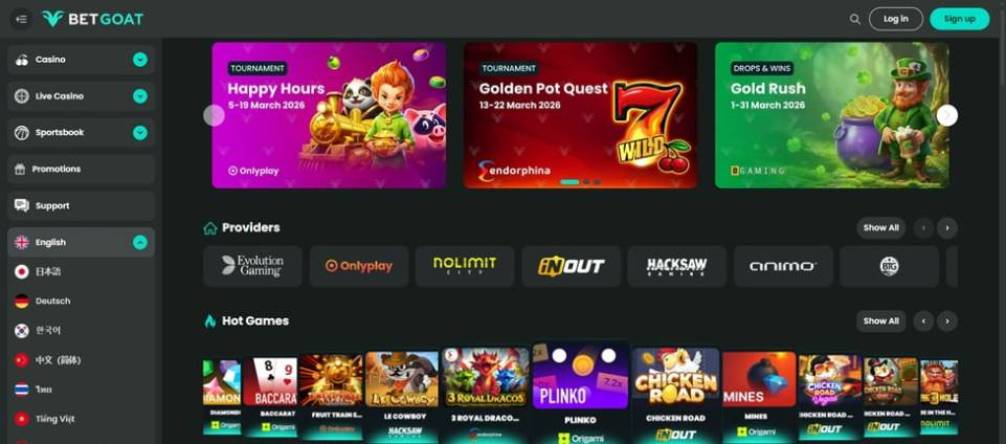
Bet Goat Casino positions itself as a modern platform for Singaporean players seeking fast, private crypto transactions. The site features a clean interface optimised for mobile play, and is home to over 2,000 casino games. Gaming categories include slots, live tables, and crash games. Bet Goat is also a bookmaker, boasting a quality sportsbook with huge odds on popular Singaporean markets.
Here’s where Bet Goat becomes a bit of an acquired taste. Payments are possible only via cryptocurrencies like BTC and USDT. This makes Bet Goat perhaps the best online casino in Singapore for tech-savvy bettors, but far from ideal for traditional players.
This makes Bet Goat’s bonuses equally divisive. The Bet Goat welcome package is a 100% crypto match, worth up to 1,000 USDT. Also, loyal players receive cashback and plenty of VIP perks, like higher withdrawal limits and exclusive game access.
Licensed in Curaçao, Bet Goat is significantly safer than most other casinos online. Users can expect reliable crypto payouts and provably fair games. However, we must warn you that the wagering requirements are a little on the steep side.
| Fact / Feature | Detail | Notes |
| Licence / Regulation | Curaçao eGaming | Offshore license |
| Game Library | 2,000+ titles | Slots, live games, crash games & sports betting |
| Payments | Crypto-only | Fast and Private |
| Bonuses | 100% match up to 1,000 USDT | Cashback & VIP perks |
| Withdrawal Limits | VIP-scaled | Varies by crypto used |
Pros
Cons

Playdash is a newcomer to the Singapore casino scene. The site launched in 2025 with a modern design and plenty of localised features that Singaporean players will appreciate. Playdash is home to over 2,000+ casino games, comfortably covering all bases. The majority of the selection is, of course, slots. But the number of live dealer tables and crash games on offer is impressive nevertheless. Better still, Playdash is browser-based and fully responsive on mobile devices.
Payment options include PayNow, local bank transfers, and a handful of mainstream cryptocurrencies, giving flexibility to users. Fast processing times can be counted on (in our experience, anyway), so expect a smooth and user-friendly experience from start to finish. The welcome package is another 100% match, this time reaching up to 400 SGD with a handful of free spins included. And, for those who keep coming back, Playdash hands out reloads and weekly cashback.
Although licensed in Curaçao, Playdash is still new and building its reputation. Early player feedback is positive, especially for its sleek interface and attractive promos tailored to the local market. As the platform expands, it’s positioning itself as a modern, locally focused alternative to bigger regional brands.
| Fact / Feature | Detail | Notes |
| Licence / Regulation | Curaçao eGaming | Offshore license |
| Game Library | 2,000+ titles | Slots, live games, & crash games |
| Payments | PayNow, Bank Transfer & Crypto | Localised options |
| Bonuses | 100% up to SGD 400 + spins | Reload & cashback |
| Withdrawal Limits | Developing VIP tiers | Competitive rates |
Pros
Cons
| Casino Name | Bonus Offer | Game Count | Payment Options | Best For |
| BK8 Casino | 100% matched deposit, worth up to 800 SGD | 3,000+ | Cards, e-wallets, crypto | Fast payouts with no kyc checks |
| 12Play Casino | 100% first-deposit bonus, worth up to 500 SGD | 3,000+ | Cards, e-wallets, crypto | Local payment support and seasonal deals |
| Gembet Casino | 100% welcome bonus, worth up to 300 SGD | 3,000+ | Crypto + traditional currencies | Vibrant slots and festive themes |
| Bet Goat Casino | 100% crypto match, worth up to 1,500 USDT | 4,000+ | Crypto only | Lightning-speed crypto gaming and no kyc checks |
| Playdash Casino | 100% first-deposit match, worth up to 400 SGD | 4,000+ | Crypto + traditional currencies | Incredible game selection & fast transactions |
One of the most common questions players ask is: Are online casinos legal in Singapore? The answer is nuanced. While the best online casino sites Singapore players access in 2026 continue to grow in popularity, the Gambling Control Act 2022 places strict regulations on the industry. Under this law, all gambling activities (including online slots, lotteries, and sports betting) are prohibited unless specifically licensed by the government.
Currently, only Singapore Pools and the Singapore Turf Club are authorised to offer limited online betting. This means most Singapore casinos are, in actual fact, offshore platforms, operating under international licenses. These casinos are technically unauthorised locally, but that doesn’t stop them from accepting Singaporean players.
The best online casino Singapore sites recommended in this guide are licensed by trusted authorities in Curaçao or Malta. These regulators enforce rules on fair play, player protection, and security, making offshore options some of the safest choices for Singapore players. Choosing a Singaporean site with a reputable license ensures secure payments, fair games, and responsible gambling safeguards.
In short, while Singaporean law does not fully permit private operators, offshore platforms fill that gap and provide reliable access. Players simply need to ensure they register with reputable and licensed providers when selecting from the best casino sites Singapore has to offer.
Singapore’s gambling policy has changed gradually over the last two decades:
While local operators remain tightly controlled, offshore casinos continue to accept Singaporean users without issue. Despite the exact legalities being a bit blurry, Singapore players have plenty of options for quality gambling sites.
A common question many players have when exploring the best online casino sites Singapore offers is whether they need to pay tax on their winnings. The good news is that Singapore does not tax casual gambling income. Whether you’re playing at an offshore site or trying your luck at government-authorised platforms, winnings from slots, table games, and sports bets are generally tax-free.
For lucky players, this means any payout you receive from an online casino in Singapore site (whether you wagered with crypto or SGD) is yours to keep, without reporting to tax authorities. This policy is one reason top online casino Singapore platforms remain attractive to local players.
However, the rules change if gambling is considered a business activity. Professional gamblers or those running gambling operations may be liable for tax on their income. For the majority of users enjoying Singapore casinos for entertainment, no taxation applies, making offshore platforms even more appealing.
In short, when choosing the best casino sites Singapore has to offer, players can focus on secure gameplay and fast withdrawals without worrying about taxes on their winnings.
With so many platforms competing for players, finding the best online casino sites Singapore gamblers can trust requires a strict review process. Our team applies a set of clear criteria to ensure only safe, fair, and rewarding platforms make our list of top online casinos in Singapore.
We first verify whether a casino is licensed by respected international regulators such as Curaçao, Malta, or Gibraltar. Since local laws restrict licensing, many Singapore players rely on offshore casinos that meet global standards for fairness and data protection. The best sites also use SSL encryption, publish transparent terms, and provide responsible gambling tools like deposit limits and self-exclusion options.
Fast withdrawals are essential. We rank higher the casinos that process crypto payouts instantly or offer fast e-wallet transactions. We also review Return to Player (RTP) rates and independent audits to confirm games are fair and payouts are consistent.
A great casino must offer something for everyone. We look for a strong mix of:
We also favour platforms powered by top developers like NetEnt, Microgaming, Pragmatic Play, and Evolution, ensuring smooth gameplay and regular new releases.
Since most players use mobile devices, we test how each casino performs on smartphones and tablets. The best sites provide fast load times, intuitive navigation, and seamless account management—whether you’re at home or on the go.

The biggest bonuses aren’t always the best. It all depends on the terms. That’s why we assess casino promotions not only by size, but by value and fairness. Our review includes:
Casinos that provide reasonable rollover terms and ongoing rewards for loyal players score highest.
When recommending casino sites to our Singaporean readers, we don’t just consider whether a casino site is good in general. Rather, we expect our top platforms to cater specifically to Singaporean tastes. That means looking for sites that have a good reputation in the region, with a proven history of paying out on time and treating Singapore players fairly.
Finally, we test customer service. The best online casinos in Singapore provide 24/7 support via live chat and email, for Asia’s diverse player base. Of course, we also look for sites that go the extra mile in breaking down language barriers by providing multi-language interface options and Singaporean-speaking support staff.
By applying these criteria, we ensure our rankings highlight only the most trustworthy, fair, and user-friendly Singapore online casinos available in 2026.
Signing up at the best online casino sites Singapore players use is a straightforward process designed to get you playing quickly. Whether you prefer crypto-friendly platforms or traditional payment options, here’s a simple step-by-step guide. This walkthrough applies to most Singapore online casinos and ensures you can enjoy slots, live tables, and bonuses without any hassle.
Go to your chosen casino’s official website or another trusted online casino Singapore platform. Always double-check the URL to avoid fake versions. The homepage should clearly display current offers, popular games, and a secure “Sign Up” button.
The process is designed to be fast and user-friendly. First, click the “Sign Up” or “Register” button, which should be located at the top-right of the platform’s homepage. Then, enter the required details. Any top online casino in Singapore will only require basic details like your email, username, and password.
After registration, you’ll receive a verification email. Click the link provided to confirm your account. Many of Singapore’s best online casinos allow you to play without immediate KYC checks, so you can start faster.
Head to the cashier section and choose your payment method. The best casino sites Singapore players trust accept cards, e-wallets, and cryptocurrencies. Some platforms also integrate casino apps and local-friendly banking solutions. Deposits are usually instant, especially with crypto or e-wallets.
Once your deposit is complete, welcome bonuses are credited automatically. For example, 12Play Casino offers a 100% match bonus, worth up to 500 SGD, plus weekly cashback and reloads. After this, you can dive into thousands of games, from themed slots to live dealer experiences, available on desktop and mobile devices.
This streamlined sign-up process is consistent across all of the best online casino Singapore platforms, ensuring players can enjoy secure gameplay and fast access to rewards.
When exploring the best online casino sites Singapore players use in 2026, one of the biggest draws is the variety of games available. Whether you prefer fast slots, traditional table games, or immersive live dealer experiences, today’s Singapore online casinos offer something for everyone. Below is a look at the most popular options.
Slots remain the number one choice at both local-friendly and offshore casino sites Singapore players access. From classic three-reel machines to video slots with bonus features, free spins, and jackpots, the selection is massive. The best online casinos Singapore has to offer all partner with trusted developers like NetEnt, Pragmatic Play, and Play’n GO to ensure smooth gameplay and fair payouts. Many also feature progressive jackpots, giving players the chance at life-changing wins.
Roulette is a timeless favourite at online casino Singapore platforms. Players can choose from European, American, or French Roulette, with European versions often preferred for their lower house edge. Easy to learn and always exciting, roulette appeals to both casual users and experienced bettors alike.
A long-standing favourite across Asia, baccarat is a must-have at the best casino sites Singapore users trust. Its low house edge and straightforward rules make it attractive to new players, while high rollers enjoy the fast-paced action. Live dealer baccarat, in particular, has become a highlight at the best online casino Singapore sites.
For players who prefer a simple, lottery-style game, keno is a popular option at Singapore online casinos. It’s fast-paced, requires no strategy, and delivers quick results, making it ideal for casual sessions.
Poker fans will find several poker variants available at the best online casino sites Singapore has in 2026. From video poker to Casino Hold’em and Three Card Poker, these games bring both luck and strategy into play. Although not as in-depth as full poker rooms, these casino apps offer plenty of opportunities for big wins.
Popular across Asia, Sic Bo is a fast three-dice game that’s widely available at Singapore sites. Players bet on outcomes like total (Small/Big), specific numbers, doubles, or triples, with straightforward rules and a broad range of odds. Many top sites offer both RNG versions and live dealer tables. Live Sic Bo games usually have unique twists on the traditional rules. For example, “Super Sic Bo” introduces the uncertainty of random multipliers, delivering quick rounds with wild volatility.
Live dealer rooms are one of the fastest-growing categories at Singapore casinos. They combine real human dealers with high-definition streaming for games like blackjack, roulette, and baccarat. Some even include interactive game shows such as Crazy Time and Dream Catcher, giving players an experience that feels closer to land-based casinos.
Many Singapore online casinos now feature unique arcade-style and instant-win games for players who want something different.
Beyond traditional casino offerings, many Singapore platforms allow betting on virtual sports or esports. These RNG-driven simulations or live esports matches provide action 24/7.
When playing at the best online casino sites Singapore, choosing the right payment method is just as important as selecting the platform itself. The top online casino Singapore operators now offer a wide mix of traditional and modern banking options, ensuring players can deposit and withdraw securely. Below are the most common and convenient choices you’ll find at Singapore online casinos.
Visa and Mastercard remain two of the most widely used deposit methods at Singapore’s best online casinos. They’re easy to use and familiar to most players, offering fast deposits and reliable security. However, some banks in Singapore may block gambling transactions, so players often use alternative methods for withdrawals.
E-wallets such as Skrill, Neteller, and ecoPayz are highly popular at the best casino sites Singapore players trust. They provide a fast and private way to transfer funds, with most withdrawals processed in just a few hours. Many casino apps also integrate these wallets, making mobile payments seamless.
Crypto has quickly become one of the most attractive payment options for Singaporean online gamblers. Platforms that support Bitcoin, Ethereum, USDT, and Litecoin offer near-instant deposits and withdrawals. Many top Singapore sites, such as Bet Goat, are even fully crypto-based, giving players maximum privacy and speed.

For larger deposits and withdrawals, direct bank transfers are still available. While they’re slower than e-wallets or crypto (taking 2–5 days), they remain a trusted option at several top online casino Singapore platforms, particularly for high rollers.
Some of the best online casino sites in Singapore also support prepaid solutions like Paysafecard or crypto vouchers. These are ideal for players who want more control over spending or prefer not to share personal financial details. Deposits are instant, but withdrawals usually require switching to another method.
The best casino sites Singapore players rely on often integrate region-specific solutions, such as local bank transfers or country-specific payment gateways. These options make deposits and withdrawals smoother for players who prefer familiar banking methods over e-wallets and crypto.
As online casinos grow in popularity, responsible gambling remains essential. The best online casino sites Singapore players trust in 2026 balance entertainment with strong player protection, helping users stay in control of their habits.
Leading platforms offer deposit and loss limits, session reminders, cool-off periods, and full self-exclusion options. These features are simple to activate and give players more control over time and spending.
Singapore also provides strong safeguards through We Care or the National Council on Problem Gambling (NCPG), which runs a helpline, self-assessments, and counselling referrals. Residents can apply for casino or remote gambling self-exclusions, while families may request Family Exclusion Orders.
Keep gambling fun by setting a budget, treating it as entertainment, and avoiding play when stressed or emotional. Never borrow money for games, take regular breaks, and track your time to maintain a safe, enjoyable experience.
Responsible gambling ensures long-term enjoyment. With the right tools, support systems, and mindful play, Singapore players can enjoy online gaming without sacrificing well-being.
Finding the best online casino in Singapore, among the innumerable options, comes down to trust, fast payouts, and rewarding bonuses. Options like BK8, 12Play, and Gembet continue to rank as some of the best online casino sites Singapore players can access in 2026. These sites combine secure payments, user-friendly design, and thousands of games, making them standout choices for both beginners and seasoned users.
Excellent runner-up options include BetGoat, which is a top option for players who want a no-KYC sign-up process and lightning-fast crypto withdrawals. Playdash is also an appealing option, especially to Singaporean players, with local payment options and generous ongoing promotions. It’s also one of the best casino sites Singapore players turn to for colourful themes and a huge slot library.
Overall, the best online casinos Singapore provide entertainment, privacy, and reliable access for players who value smooth gameplay. By choosing a top Singaporean platform, you can enjoy fair games, modern features, and stress-free withdrawals. Take your pick from the best casino sites Singapore has to offer and start playing with confidence today.
Online gambling is strictly regulated in Singapore. This means that local options are limited, but Singaporean players can legally access licensed offshore platforms. These casinos operate under international gaming licenses like Curaçao and are widely used by players in Singapore without breaking local laws.
So long as a casino is regulated, audited, and secure, you can trust it. To verify a site is regulated, check for a license. The best online casinos in Singapore carry licenses from Curacao. As for fairness, evidence of audits from independent test houses should be visible alongside a site’s licensing information. Finally, to verify a site is secure, simply look for the padlock icon in the URL.
If you’re a fan of slots, GemBet is a top choice. It features a huge variety of themed slot games, high payouts, and smooth performance across devices. Its vibrant design and slot-focused layout make it perfect for casual and serious slot players alike.
Most offshore casinos accept international currencies like EUR or USD, but many also support cryptocurrency for faster, more private transactions. Some platforms offer flexible payment options that work well for Singapore-based players, even if SGD isn’t a direct option.
BK8 Casino is known for its quick payouts, especially for crypto users. Withdrawals are processed rapidly, often within minutes, making it a favourite for players who want fast access to their winnings.
At Bet Goat Casino, no KYC (Know Your Customer) verification is required during signup. This allows players to register, deposit, and play without uploading personal documents. However, some other platforms may require ID verification during large withdrawals or for added security.